
Dynamism and Drama: An Introduction to Art in The Baroque Period
- 2 days ago
- 10 min read
In this post, meet some of the most important artist of the Baroque. Find out how artists used dynamism and abundant forms to create intensity and drama—and how other artists had very different ideas!

The term “Baroque” is used to describe the art of the 17th and part of the 18th century, (1600–1730) but it can also be used to identify a certain type of art that uses dynamic and abundant forms and dramatic and intense feelings). Not all art from the Baroque period is “Baroque” in this latter sense.
Important artists of the Baroque period include Rembrandt and Vermeer, (whom we looked at in our last post, on Dutch Golden Age Painting). More typical of the Baroque style include Van Dyck, Velázquez, Caravaggio, Rubens, and Guido Reni.
The Baroque period also included important historical events such as the Thirty Years’ War, the Peace of Westphalia and the Counter-Reformation. Some scholars see the end of the 16th century as a dividing point between two different artistic periods, although these differences are not perceived to be as deep as the differences that separate the Renaissance from the prior medieval era.
René Descartes (1596-1650) argued for the importance of rationalism over reliance on the senses. Read about his cogito, ergo sum (“I think, therefore I am”) and other ideas in our blog post on Descartes. On the other hand, Francis Bacon (1561-1626) championed empiricism and developed the scientific method, based on observation, experimentation and inductive reasoning. Figures like Galileo and Isaac Newton also made an impact and there were inventions like the telescope and microscope. This interest in scientific themes is reflected in Baroque art, like Vermeer’s The Geographer (1669)—an example of Dutch Golden Age painting.
Important patrons of the arts included the Catholic Church, which was the largest patron for artists in many parts of Europe. The monarchy and aristocracy were also important patrons—Rubens, Van Dyke and Velázquez all had positions at various courts.
Michelangelo Merisi da Caravaggio
Michelangelo Merisi da Caravaggio was born in Caravaggio, near Milan. He trained in Milan and worked mostly in Rome. He had an eventful life there—he was arrested for street fights, insulting authorities and illegal possession of arms many times and was forced out of Rome after killing his opponent in a dispute over a tennis match. After this, he painted in Naples, in Malta and in Sicily.
Caravaggio is known for his use of tenebrism—the technique of surrounding well-illuminated subjects with darkness to create a “spotlight” effect. Tenebrism is a common feature in Spanish and Italian baroque paintings.
For instance, Caravaggio’s The Inspiration of Saint Matthew (1602-1603) uses tenebrism. The painting shows Mathew standing out starkly against the dark background. The church initially rejected Caravaggio’s first version of this work because it made the saint seem too common: Caravaggio had wanted to show evangelists were not wise themselves, but were inspired by Heaven (represented by an angel). Also in this painting, Caravaggio makes one of the legs of the bench look like it is leaning out towards the viewer world.
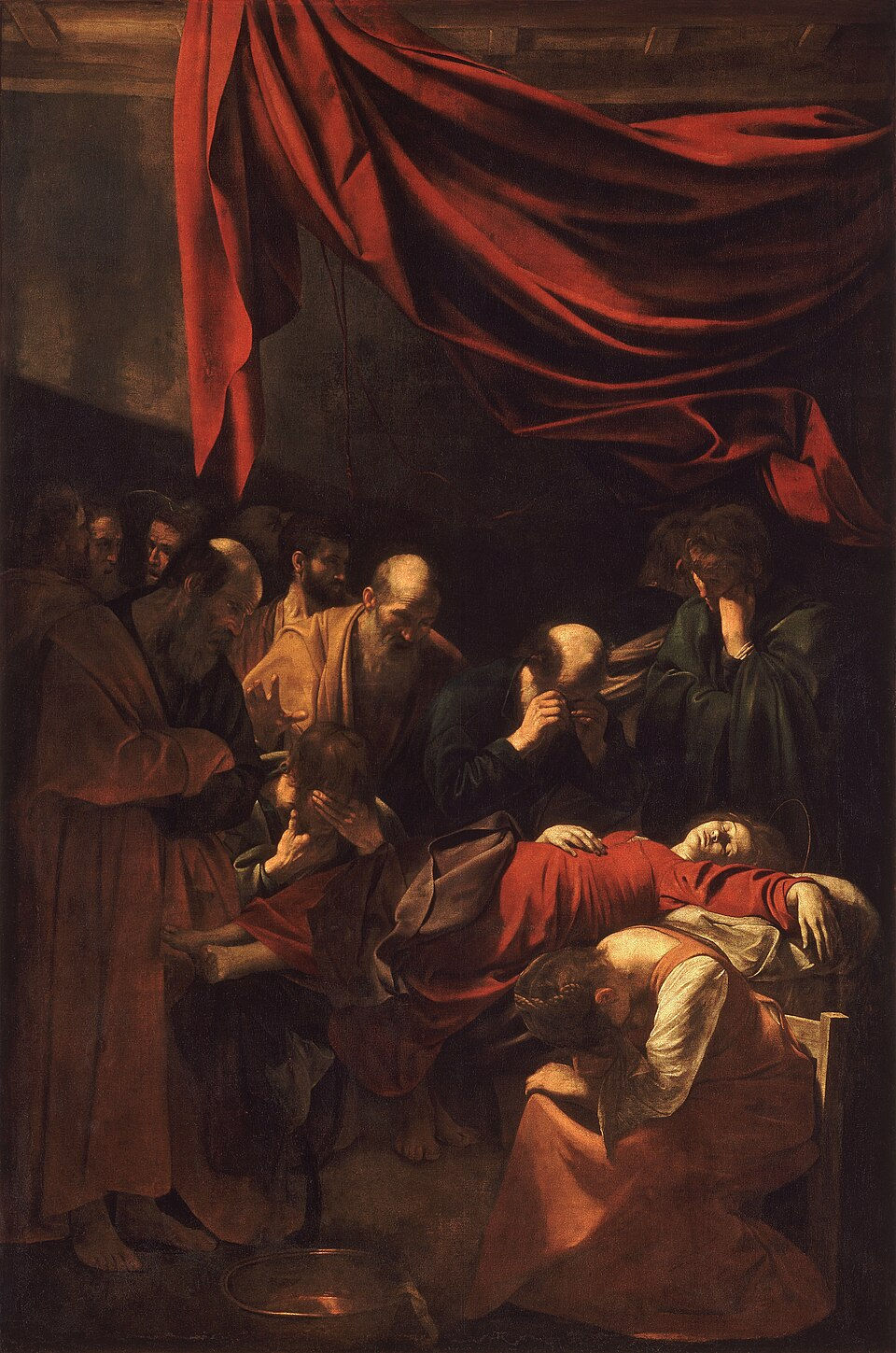
Caravaggio’s The Death of the Virgin (c. 1604–1606) was also rejected by the Carmelite friars who had commissioned it, on the grounds that the depiction of the Virgin was too common and realistic. The diagonal angle of her body is typical of Baroque painting.
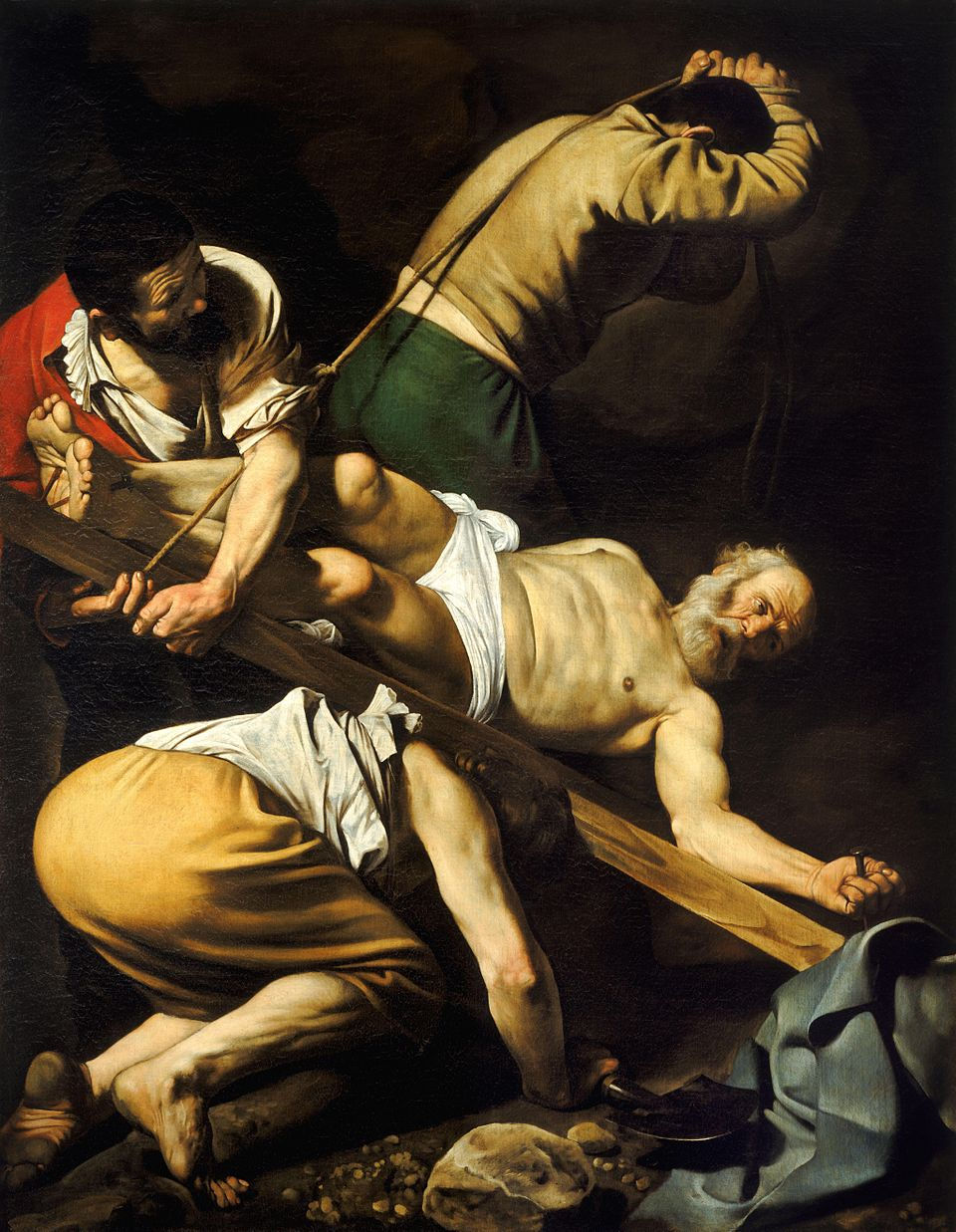
Caravaggio’s taste for realism can also be seen in his Crucifixion of Saint Peter (1600-1601) in Santa Maria del Popolo Church in Rome. In it, the figures are very close to the foreground and there is dirt on their hands and feet. Their faces are tanned by the sun. Caravaggio was inspired by Michelangelo’s “X” composition, in his own Crucifixion of Saint Peter (1546–1550) in the Vatican.
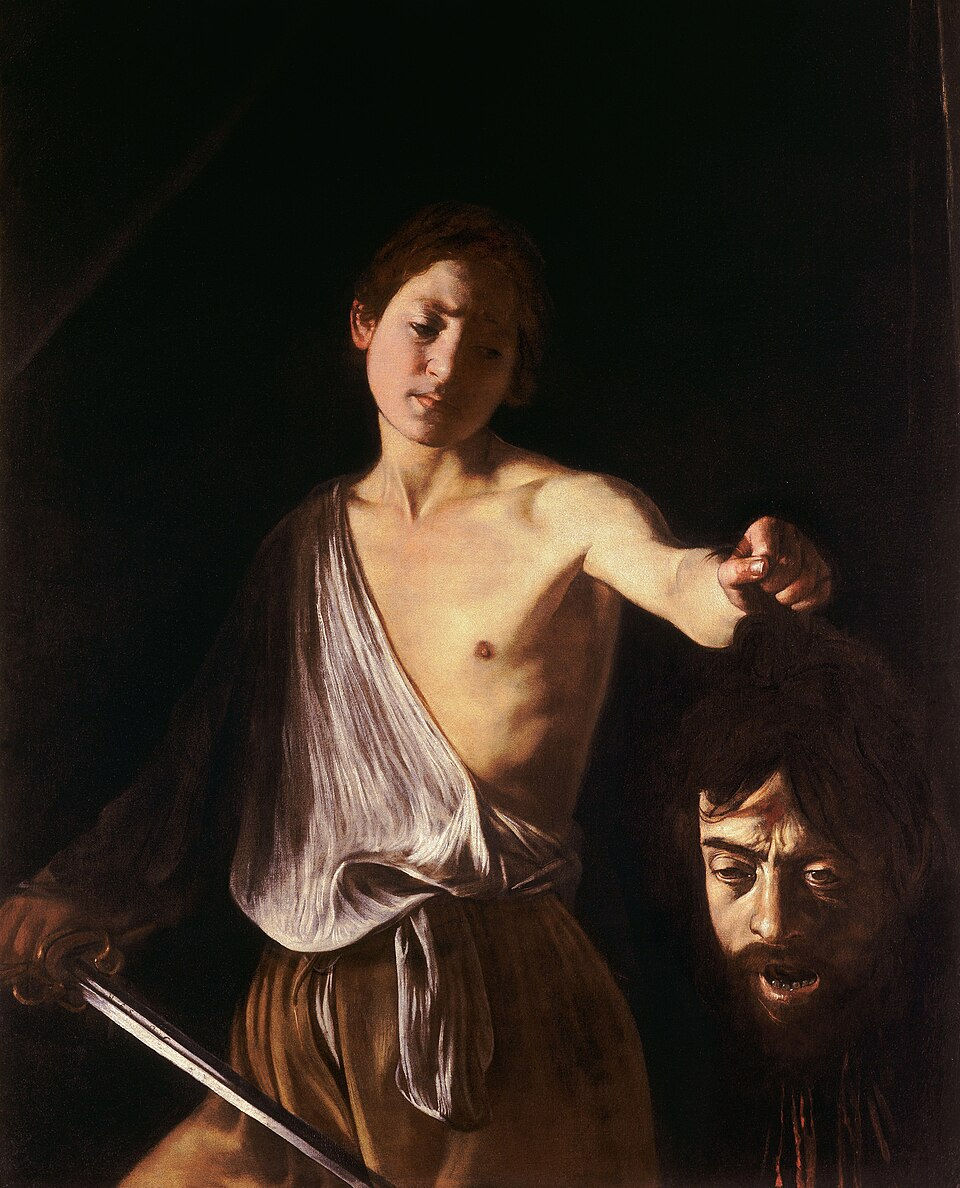
One of Caravaggio’s most famous paintings is his David with the Head of Goliath (1605-1610). This shows Caravaggio’s own features on Goliath’s severed head. Caravaggio also depicted his own signature in the “blood” flowing from Saint John the Baptist in his Beheading of Saint John (1608).

Artemisia Gentileschi
Artemisia Gentileschi was the daughter of painter Orazio Gentileschi and one of the leading Caravaggisti in Europe. She worked in worked in Rome, in Florence, in Venice, Naples and London.
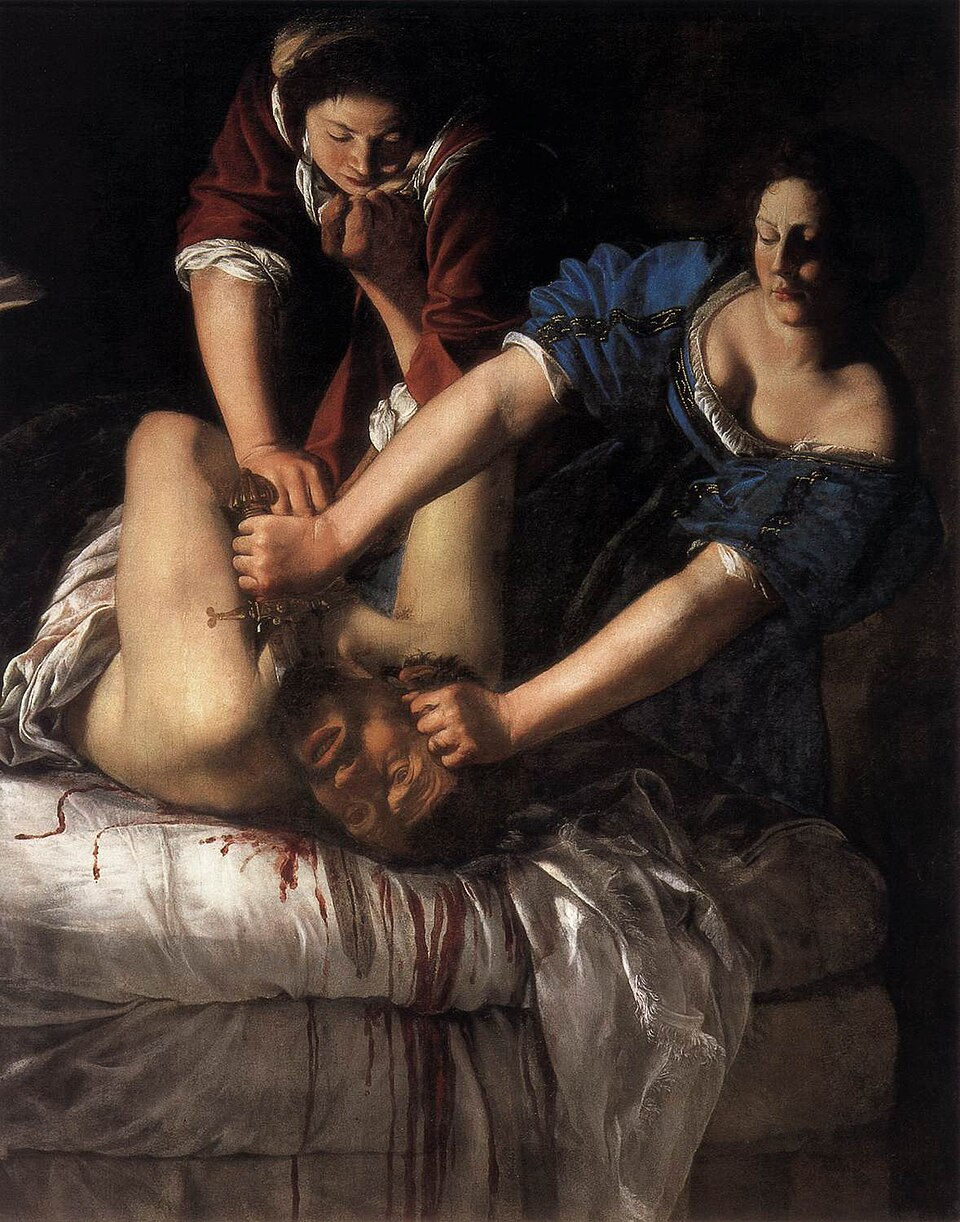
Gentileschi’s Judith and Holofernes (c. 1612; 1620) might have been informed by the rape that Artemisia lived through by the artist Agostino Tassi. Tassi had been hired to teach her architectural perspective.
In the biblical story, the Jewish widow Judith saved her city by approaching the Babylonian General Holofernes, enemy of Israel, getting him drunk and then beheading him. Caravaggio and Rubens had both painted this theme.
Jusepe de Ribera
Jusepe de Ribera was born in 1591 in Spain near Valencia but moved to Italy in his teens (Rome and Naples) and he lived there for the rest of his life. Naples belonged to the Spanish monarchy and many of Ribera’s works were sent to Spain.
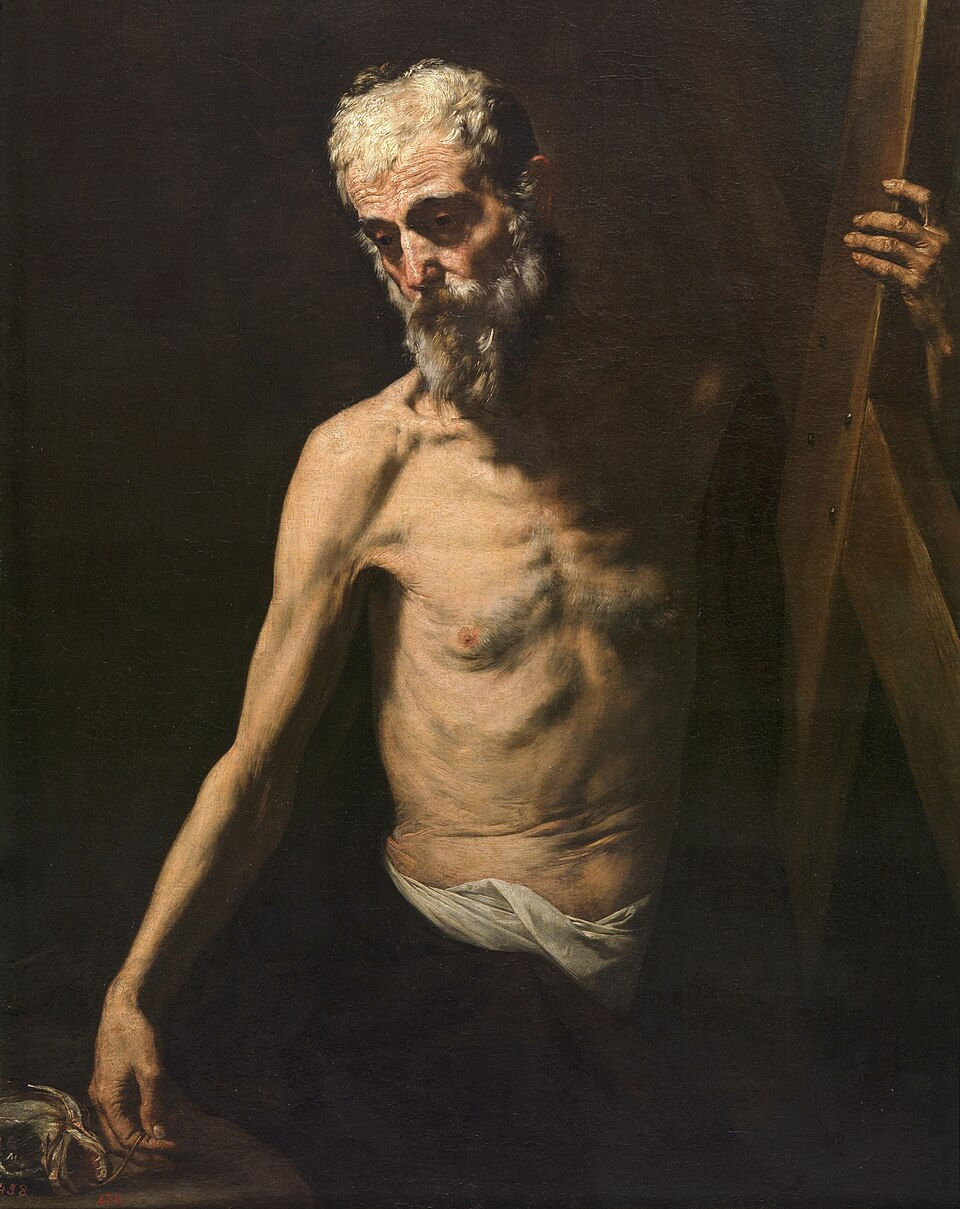
Ribera’s Saint Andrew (c. 1631) is influenced by Caravaggio’s chiaroscuro and non-idealised figures. In contrast to Caravaggio’s imposing images, Ribera’s work seems more contemplative.
Ribera also uses formal echoes: the right arm of the Saint echoes one arm of the cross and his head and body echo the other. Ribera also uses very thick paint for expressive effect, which has caused problems with dirt getting into the grooves in the paint.
Diego Velázquez
Diego Velázquez was born in Seville in Southern Spain in 1599, then moved to Madrid in 1623 to become court painter to King Philip IV. He was influenced by Jusepe Ribera. Velázquez’ View of the Garden of the Villa Medici in Rome (1629-1630) is a landscape painting that exhibits the growing materialism (interest in tangible things of the present) of the Baroque period.
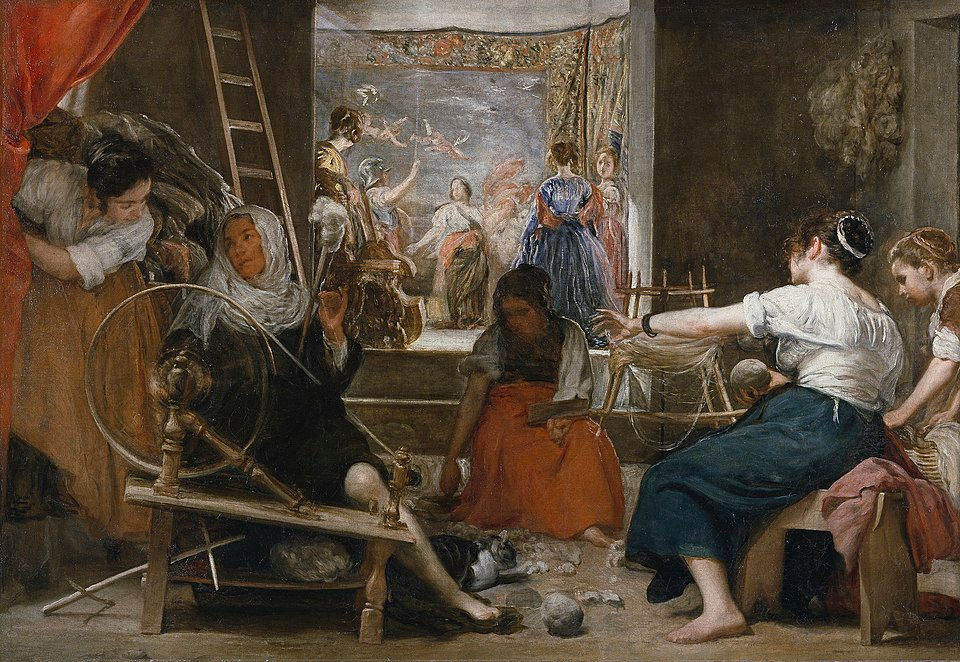
Velázquez’ The Fable of Aracne (also known as The Spinners; c. 1655-1660) was believed to show women working in a tapestry factory at Court until it was discovered that contemporary inventories described the painting as a mythological story of the Goddess Athena and Aracne, who challenged Athena to a weaving competition and was turned into a spider when she lost.
The tapestry in the picture is based on The Rape of Europa by Titian, from whom Velázquez’ learned to use blurred contours and visible brushstrokes. The contrapposto poses (with the weight on one leg) of two of the women in the picture are directly inspired by figures in Michelangelo’s Sistine ceiling in the Vatican.
Having said this, Velázquez is original, combining classical and Renaissance artistic traditions with realism—ordinary objects like the wool lying on the floor and the spinning wheel are made to look real.
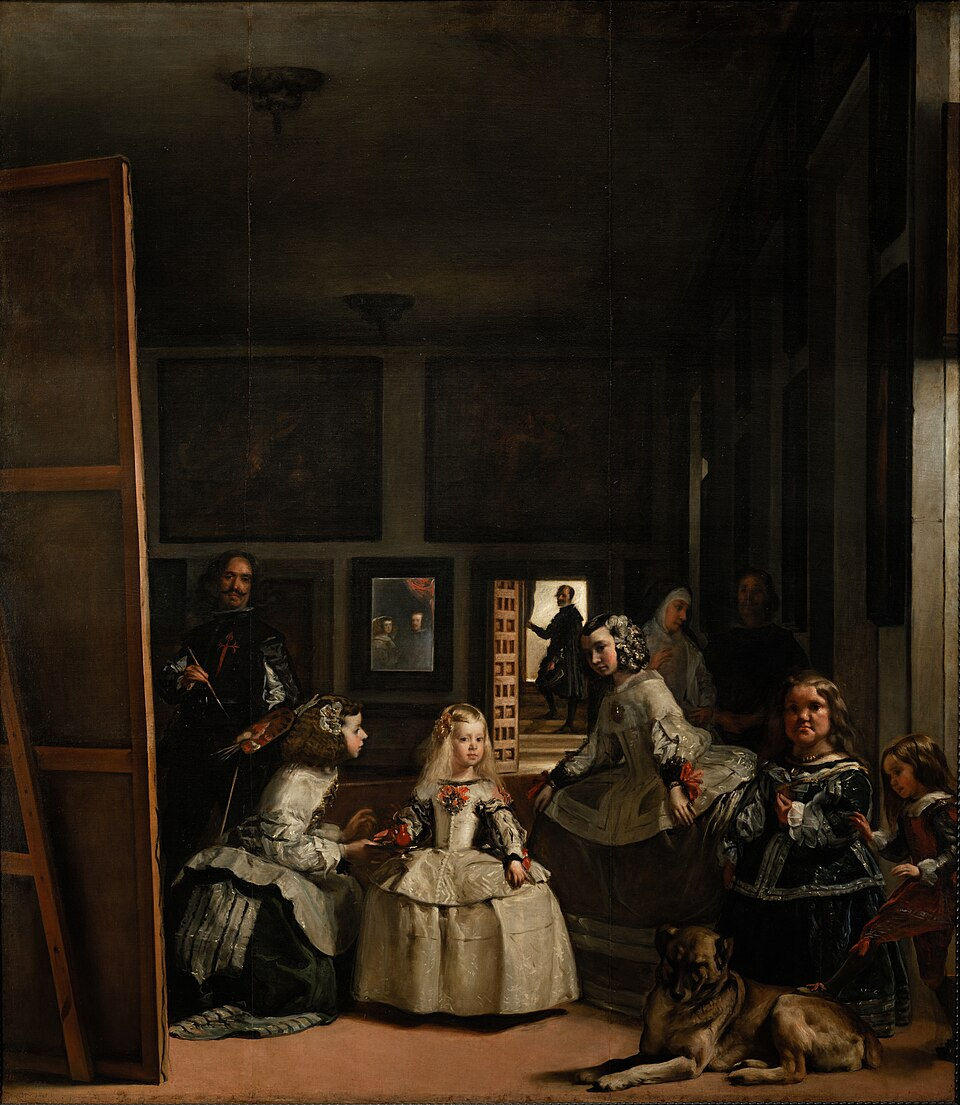
Velázquez’ Las Meninas (1656) shows Velázquez himself painting next to Margarita, daughter of King Philip IV of Spain and maids. The King and his wife Isabella Bourbon are reflected in the mirror hanging from the back wall (perhaps Velázquez is painting them).
“Las Meninas” is a Portuguese word used for the noble women who acted as maids of honour to the King’s daughter. The painting looks realistic due to the limited range of colours and light that enters through the side windows and back door and the sense of a three-dimensional volume all contribute to the realism of the scene. Velázquez’ was inspired by Jan van Eyck’s Arnolfini Portrait to use the mirror in the painting (click the link to read about the Arnolfini Portrait and the Northern Renaissance).
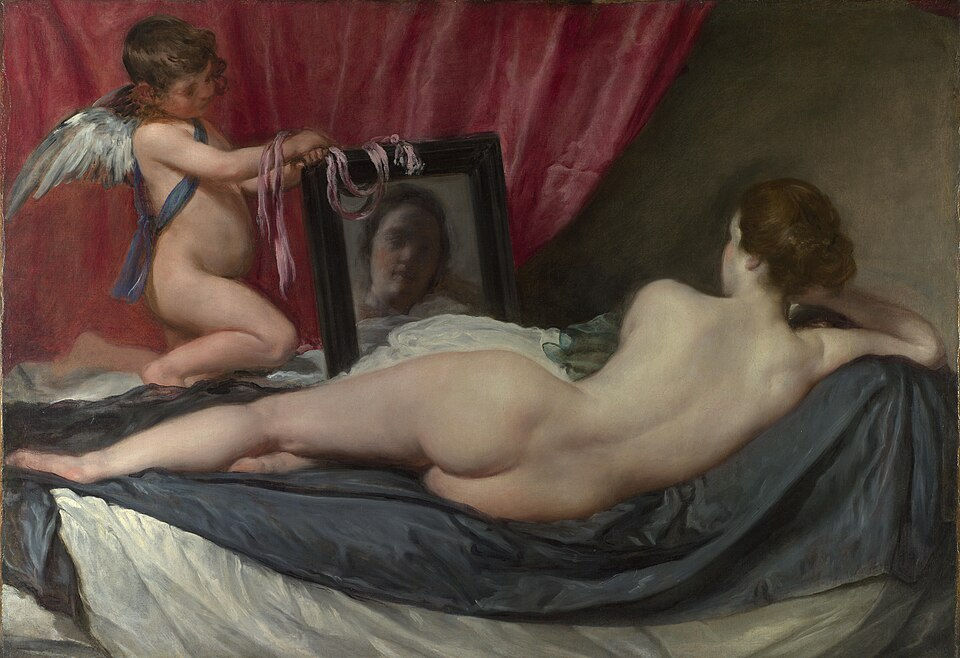
One of Velázquez’s most famous works—and his only surviving nude—is The Toilet of Venus (also called The Rokeby Venus) (1647-51) shows Venus reclining on her bed languidly on her bed, her face reflected in the mirror held up by her son Cupid.
Francisco de Zurbarán
Francisco de Zurbarán worked for most of his life in Extremadura and Seville. He did not train at the main artistic centres of the time so had a limited knowledge of anatomy and the depiction of three-dimensional space.
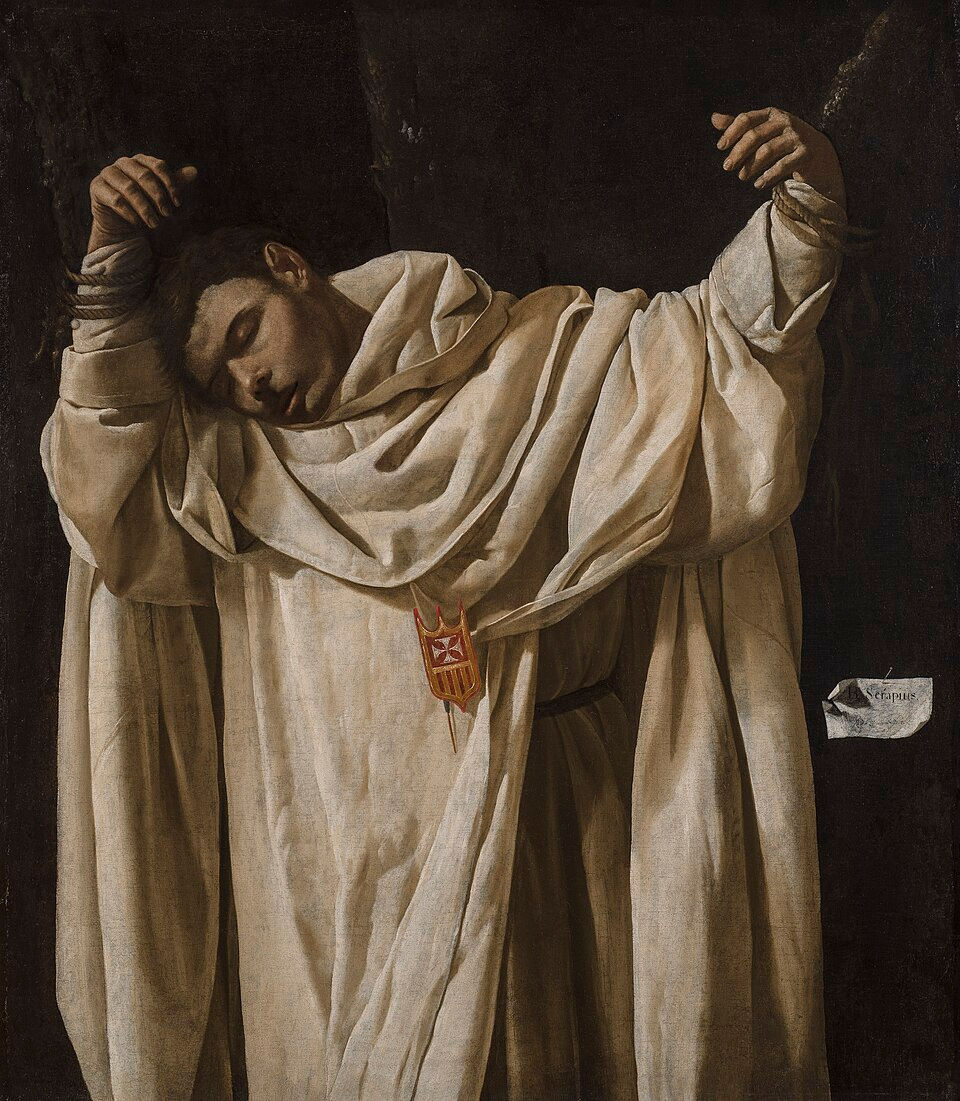
Having said this, Zurbarán was a master of painting fabrics and texture, with which, as the son of a merchant, Zurbarán had a lifelong relationship. Take a look at his The Martyrdom of Saint Serapion (1628) for a beautiful example of this.
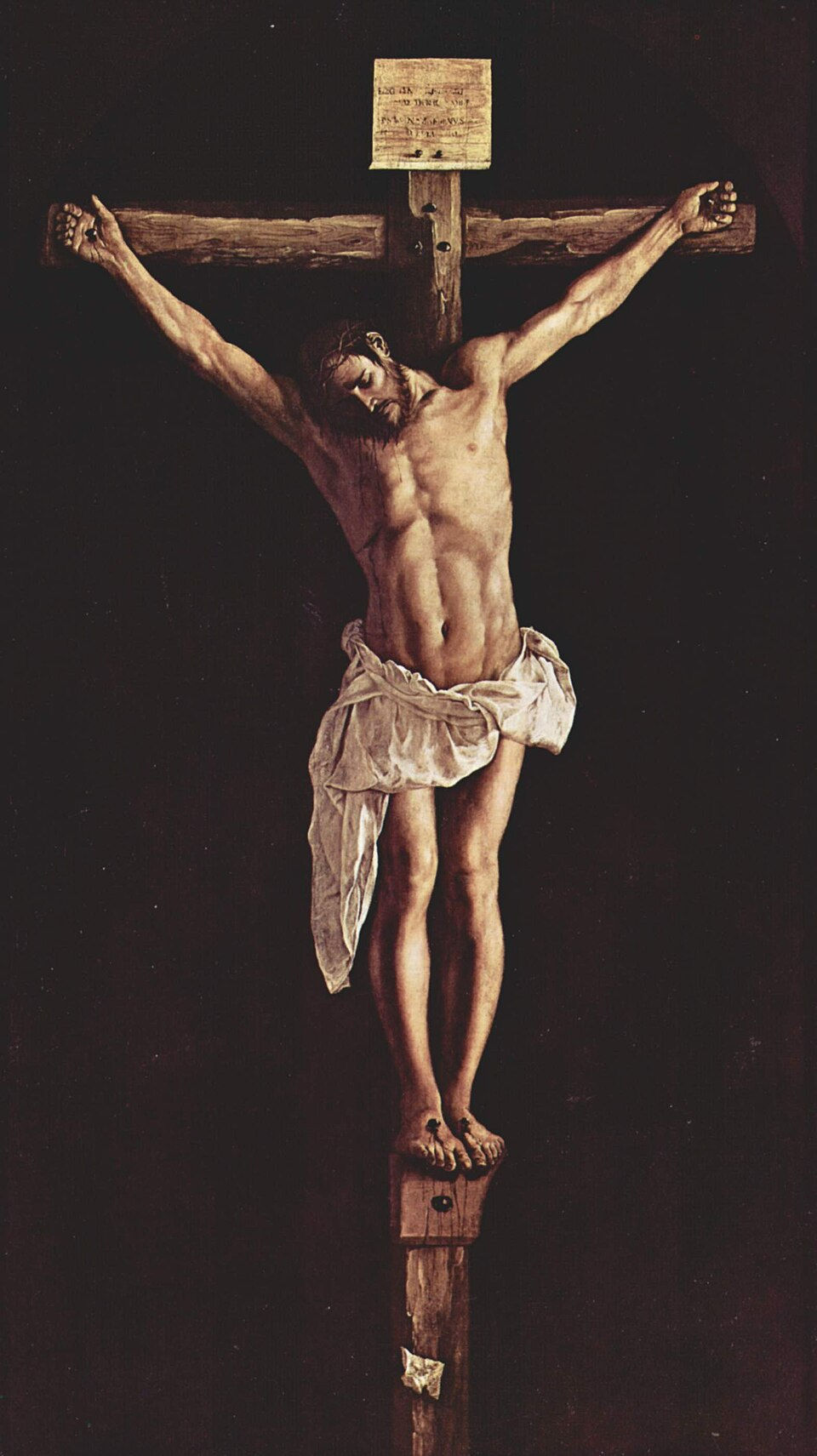
Zurbarán painted for many of Seville’s religious orders and many of his works were not on public display. For instance, his The Crucifixion (1627) hung in the sacristy Dominican Priory of San Pablo el Real in Seville. In the dim candlelight of the priory, many people thought that the painting was actually a sculpture.
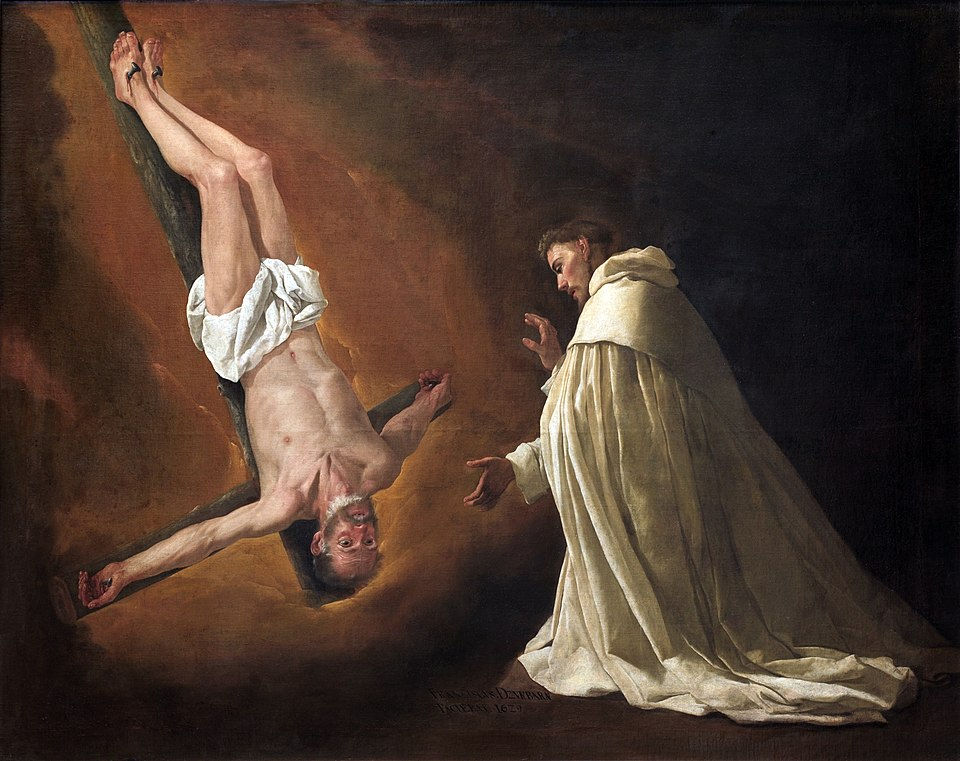
Art critic Waldemar Januszczak says of Zurbarán’s Saint Peter Nolasco’s Vision of Saint Peter the Apostle (1629): “If you turn the upside-down figure the right way round you’ll see that his expression is actually rather serene. But in the painting, inverted, the grimace feels devilish. The artistic mind that came up with this crazy religious scene was inventive, fierce, cocky… Zurbarán in a nutshell.”
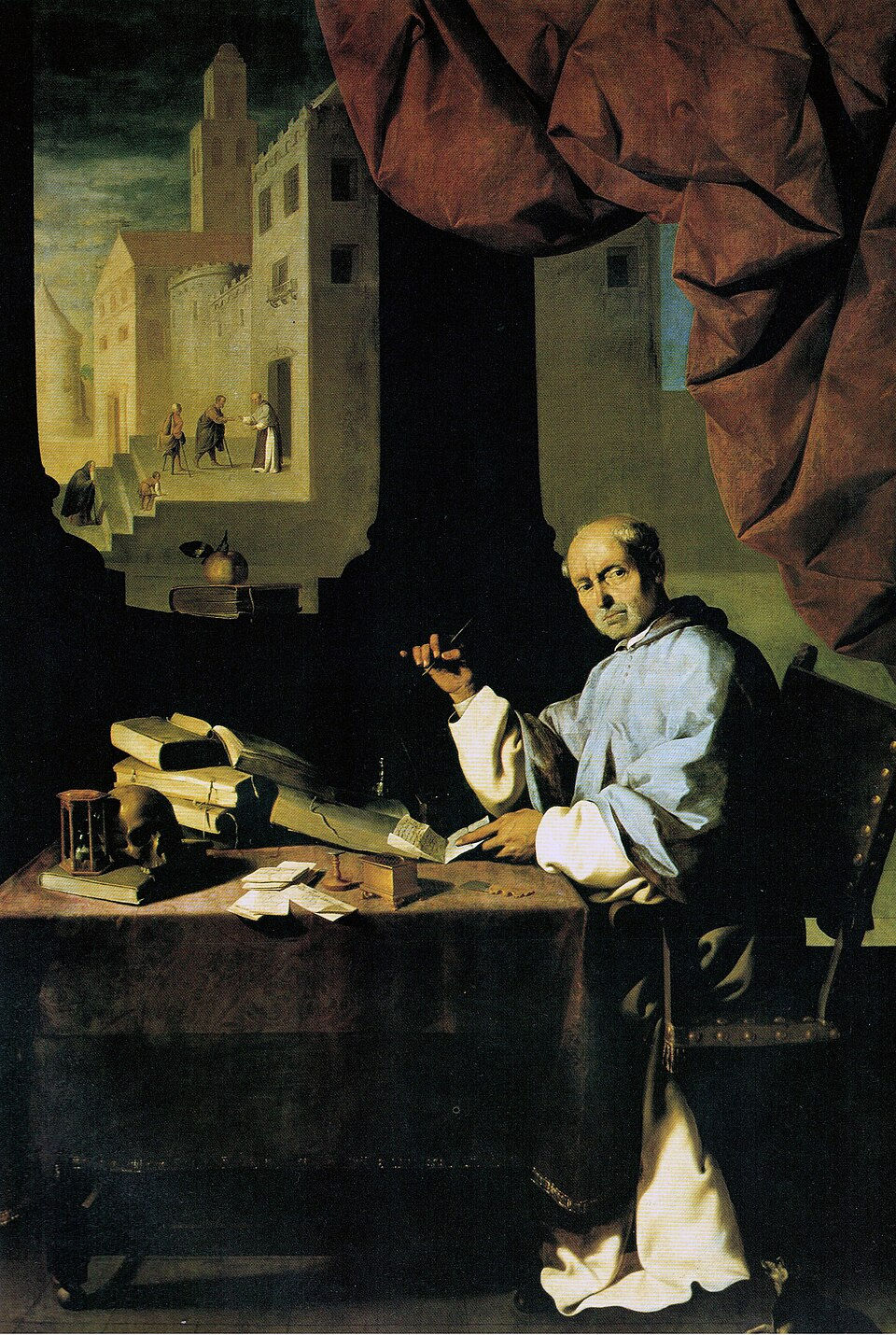
Zurbarán’s Bishop Gonzalo de Illescas in the Sacristy of the Royal Monastery of Santa María de Guadalupe (1639) depicts a prior of the Monastery (later Bishop of Córdoba). Zurbarán uses strong contrast between light and dark and incorporates many common objects in his paintings. Zurbarán learned this kind of realism indirectly from Caravaggio.
Zurbarán also used simplified architecture in the background and especially the large size and heavy folds. For instance, his Young Virgin (1632-1633) depicts the young Virgin Mary and uses contrasting light, still life objects and strong draperies.
Mattia Preti
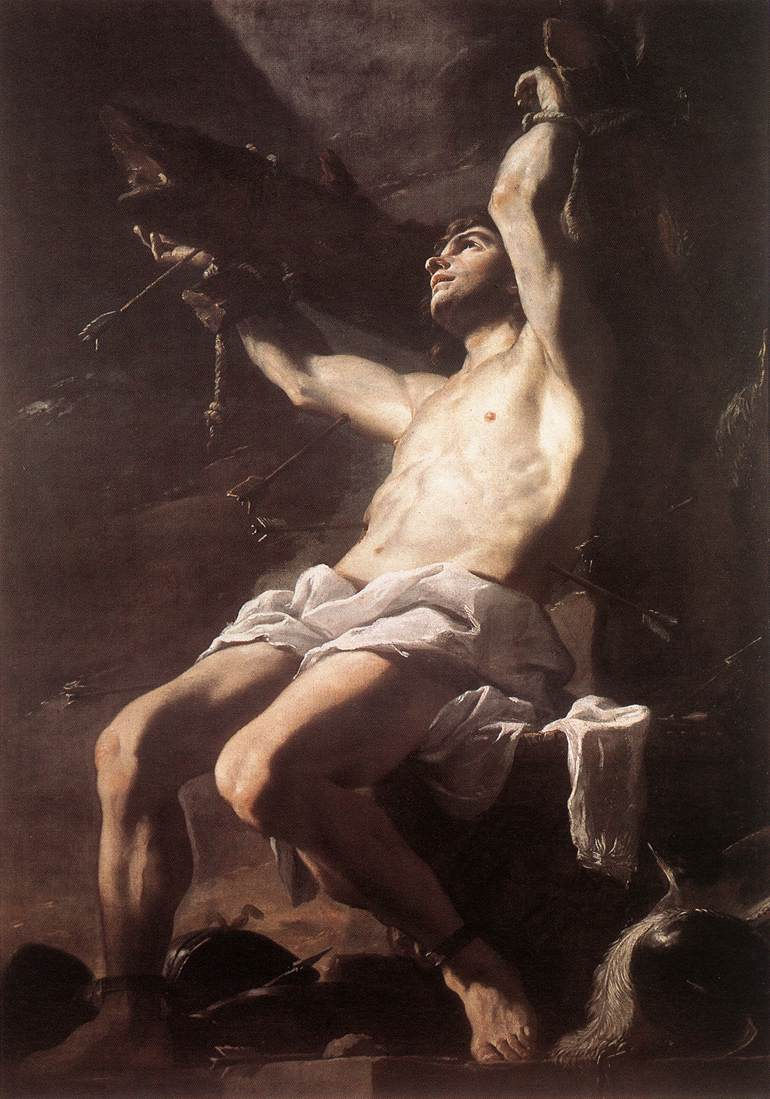
Mattia Preti painted in Rome and Naples. His Saint Sebastian (c. 1657) shows the saint with a plasticity of figure (it seems like his powerful body is being moulded). Sebastian was a Christian martyred in the Roman Empire. Artists liked depicting him because they could study ancient sculptures of nudes.
Guido Reni
Guido Reni was born in 1575 and trained and worked in Bologna, spending time in Naples and Rome. He was inspired by the idealistic style of Raphael.
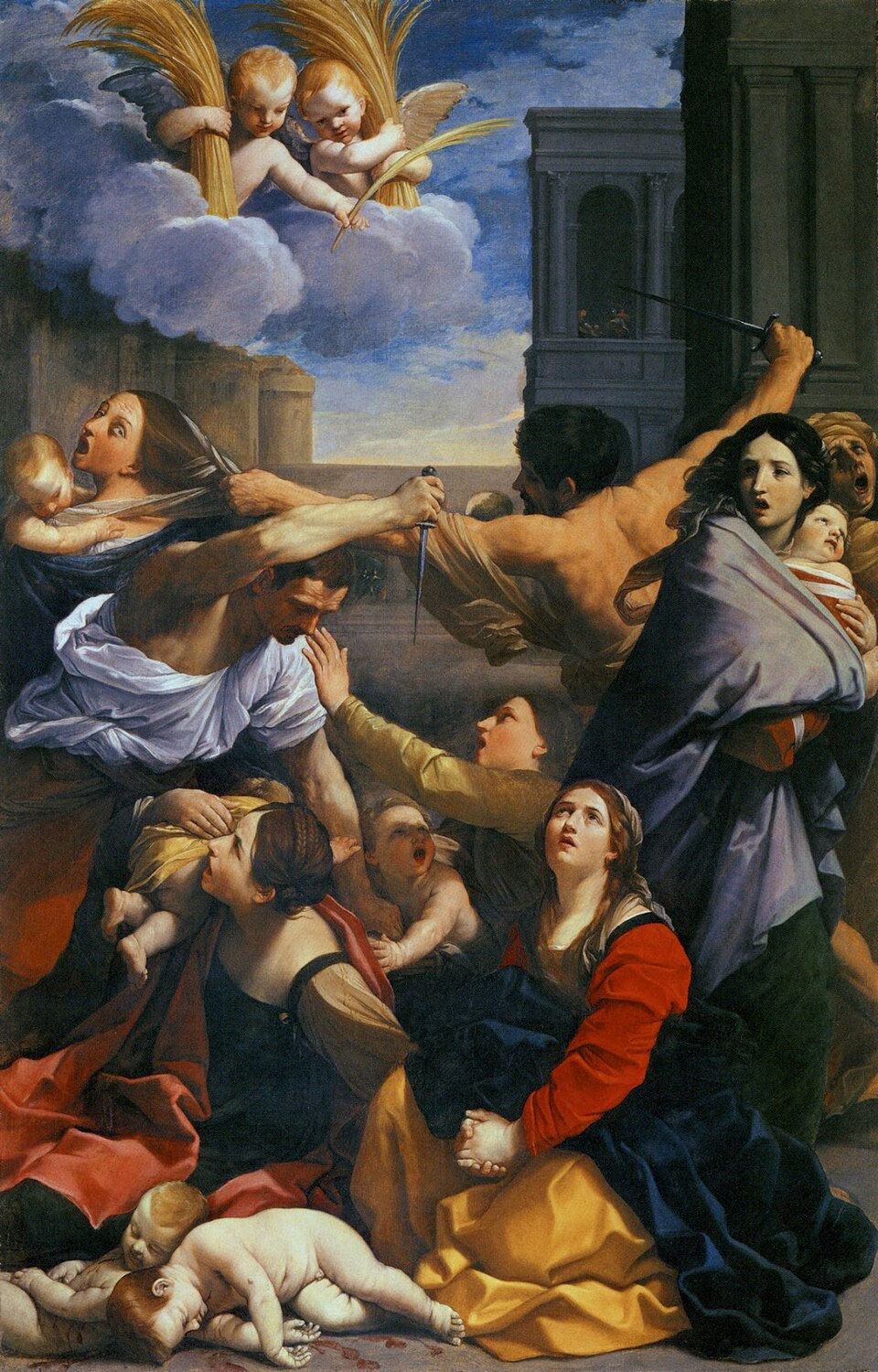
Reni’s Massacre of the Innocents (1611) shows the death of the children in Bethlehem on the orders of King Herod, with two angels at the top to symbolise the triumph of martyrs (i.e. the slaughtered children). The faces of the mothers show realistic emotions. The symmetry of the composition and idealisation of the figures show Raphael’s influence and an admiration for classical statues.
Claude Lorrain
Claude Lorrain (often known as Claude in English) was one of the most influential landscape painters in the history of art, recognisable by his paintings’ luminosity and golden light. He was born in the Duchy of Lorrain (later part of France) and moved to Rome. His work influenced turner in England, as was English garden design.
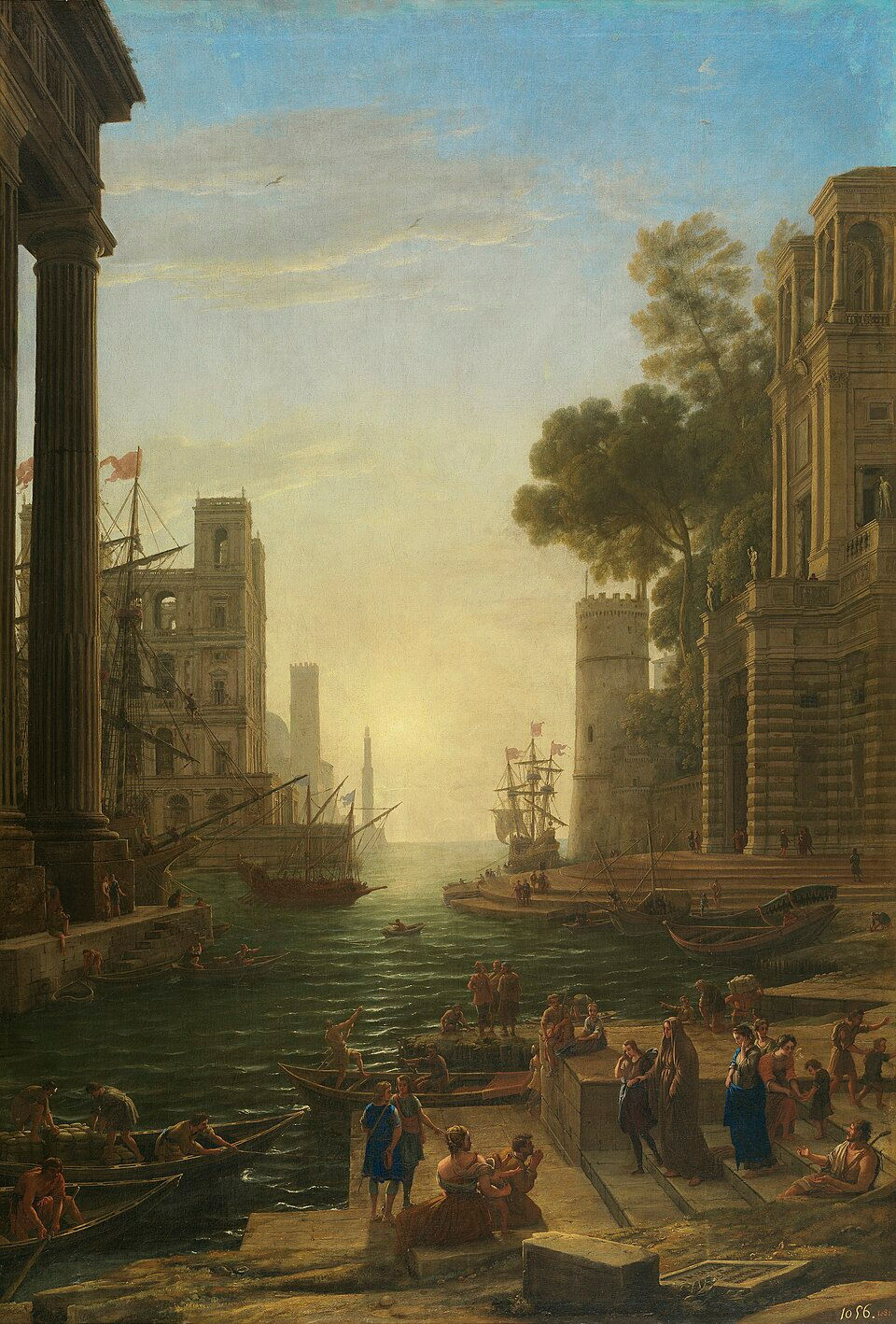
Lorrain’s Landscape with Saint Paula of Rome in Ostia (1639-1640) shows a Christian story, but its purpose is to show off the view of the harbour city of Ostia in Roman times. His paintings idealise antiquity.
Anthony van Dyck
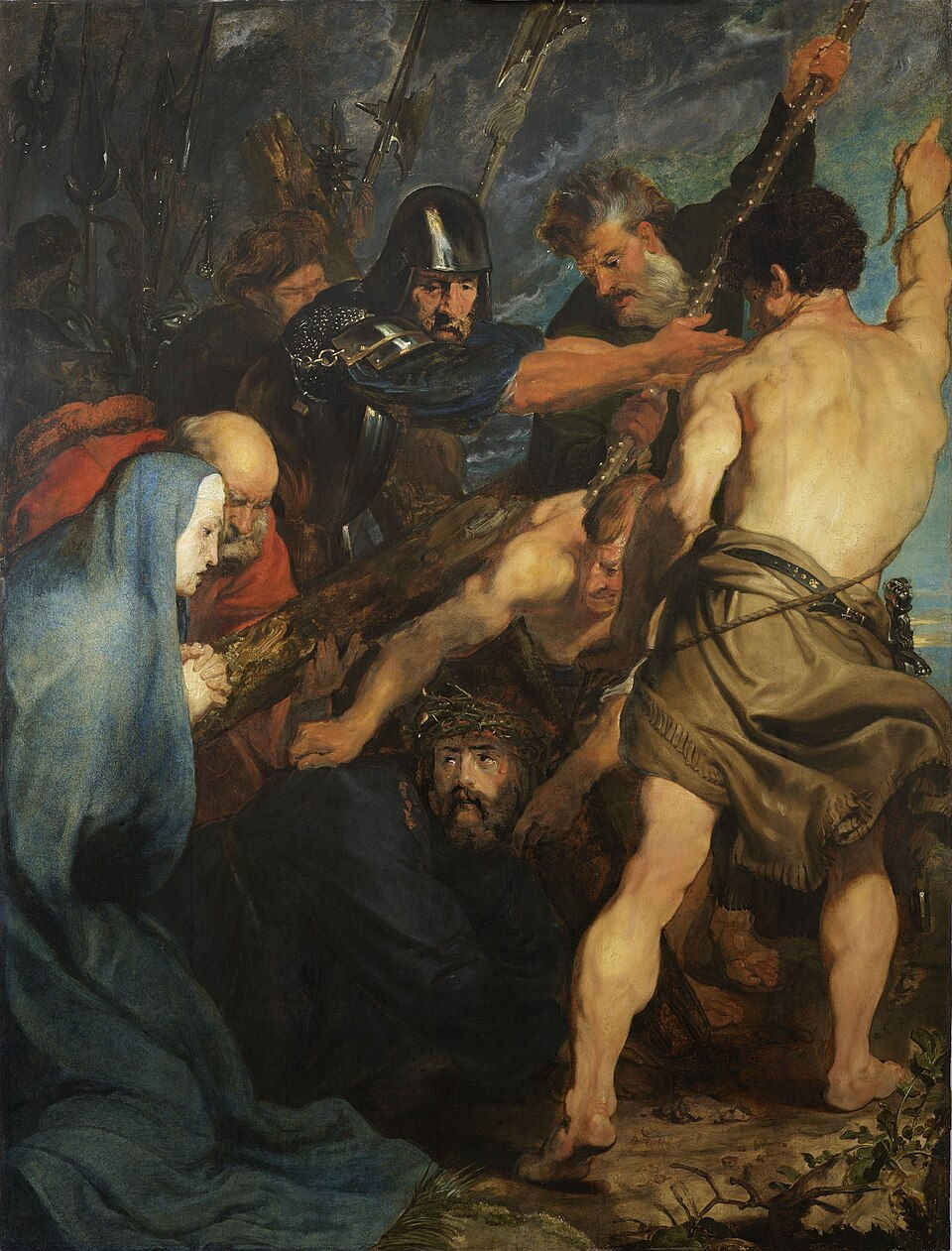
Anthony van Dyck’s work is an example of Flemish Baroque painting. He was born in Antwerp in 1599 and was a child prodigy, living also in Italy and England. He was influenced by Titian and Rubens, among others. Van Dyck liked to use muscular anatomy but crude features, for instance in his Christ Carrying the Cross (c. 1618).
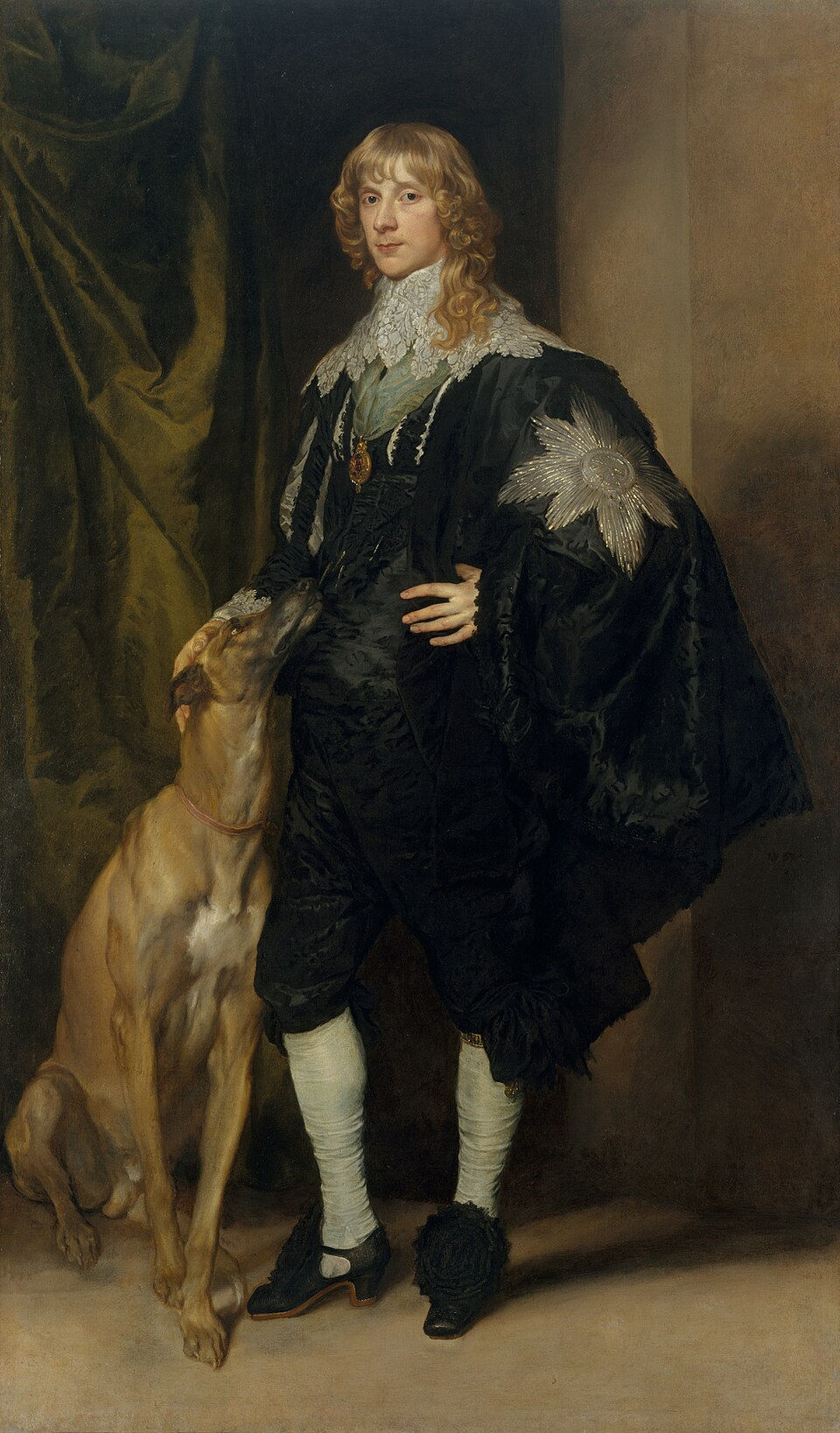
He was also renowned for his portraits, particularly among European monarchs and upper classes. He lived in England from 1632 to 1641, where he was the main painter at the court of King Charles I. His James Stuart, Duke of Richmond and Lennox (c. 1633-1635) is supposed to highlight the elegance of the sitter. The large silver star is a sign of his belonging to one of the exclusive organizations of Europe. Van Dyck influenced English portrait painters for generations, such as Thomas Gainsborough in the eighteenth century.
Peter Paul Rubens
The work of Peter Paul Rubens is another example of Flemish Baroque painting, travelling to Italy and working as a diplomat as well as an artist. Rubens is considered by art historians to be the true heir of High Renaissance masters such as Leonardo, Michelangelo, Raphael and Titian.
Rubens’ Three groups of Apostles in a Last Supper (1600-1604) and his Anatomical studies (c. 1606-1608) drawings show how he was influenced by Caravaggio and Leonardo da Vinci. Rubens’ work is known for expression of the face and movement of the body.
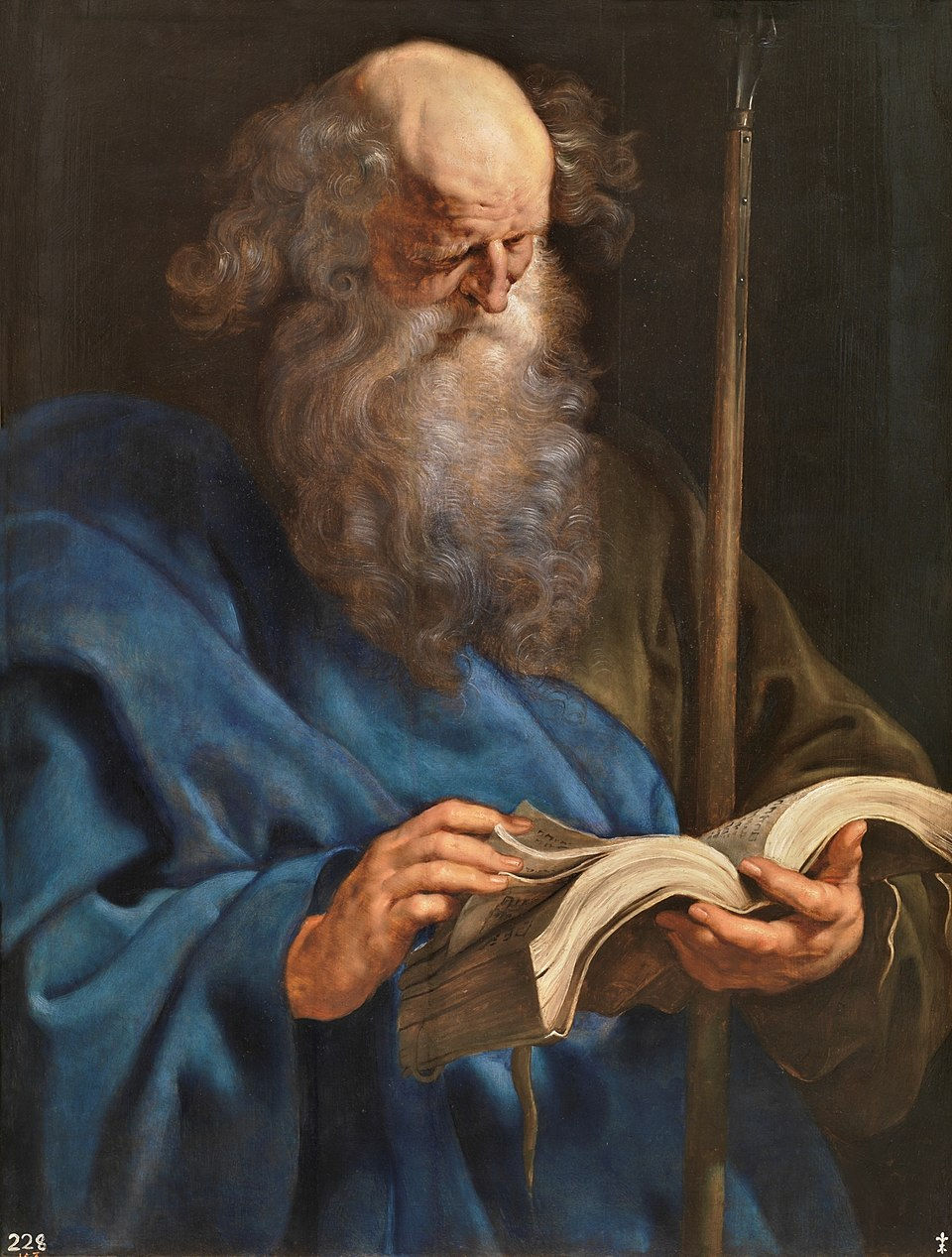
His Saint Thomas (c. 1610-12) is part of a group of thirteen paintings of the Twelve Apostles and Christ that were meant to hang together. The beard is very thinly painted and we see the orange/yellowish colour that has been applied over the panel. The contrast of convex and concave forms in the beard and hair behind the head is typical of Rubens’ style. You can also see this technique in his Clara Serena Rubens (c. 1614).
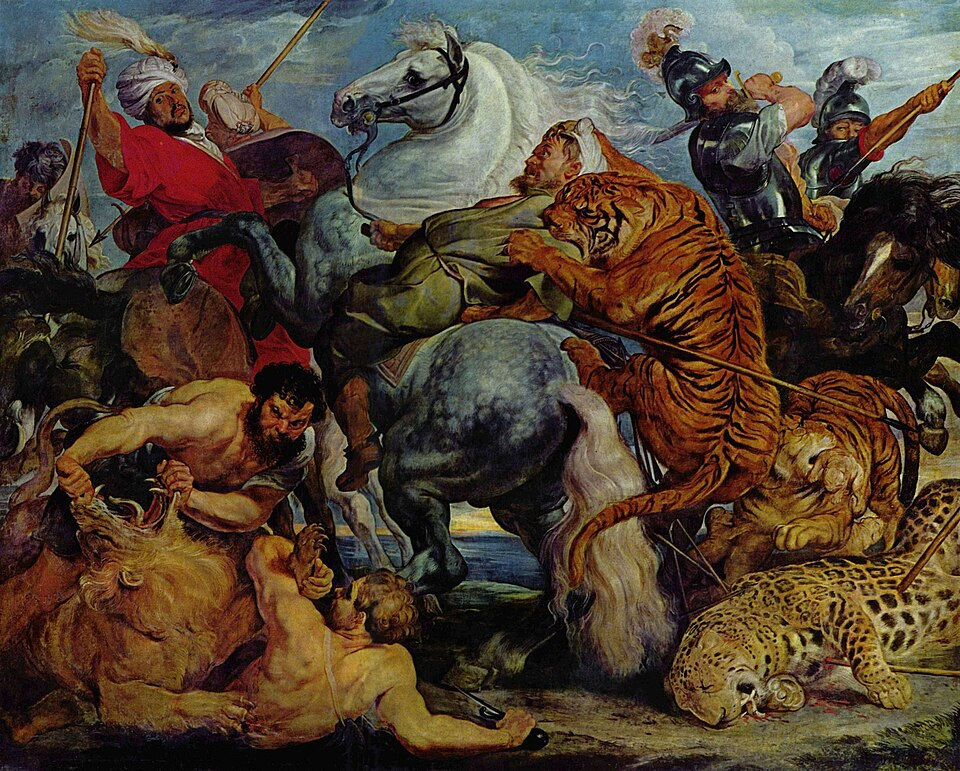
Rubens’ Lion, Tiger and Leopard Hunt (c. 1616–1617) also features the contrast of convex and concave forms, as well as the vibrant colours and vibrancy of the Baroque.
Nicolas Poussin
Nicolas Poussin was born in France but worked in Rome, where there was a debate about the relative merits of the classical style as opposed to a decorative sensuous approach. Poussin liked the classical style.

His The Abduction of the Sabine Women (c. 1633-1634) shows an episode in which Rome’s founder Romulus and his men abduct and marry Sabine women. The sculpted figures stand out against that nearly monochrome background. Poussin uses geometric patterns in the arrangement of the figures and their weapons.

These final two artists, Rubens and Poussin, were at the centre of a debate in the French Royal Academy of Painting and Sculpture at the end of the seventeenth century. The “Poussinistes” argued that the line or drawing and the intellectual structure were the focus of art, whereas the “Rubenistes” said that colour, emotion and sensory experience were the most important. Examples are Poussin’s Et in Arcadia ego (The Arcadian Shepherds; 1638) and Rubens’ sequence of paintings on the life of Marie de’ Medici.
We’ll be exploring this more in our upcoming posts. Next time, we explore the Rococo and the early Romantic art of the French Revolution!
Find out more
Our History and Art History blog has a series on Art History! Dr. Orton has written posts on the botanical illustrations of Enlightenment entomologist Maria Sybilla Merian, Joris Hoefnagel’s botanical illuminations, Ingres’ portrait of Louis-Francois Bertin and the Art History of Siena! She also has a post on the philosophy of Wittgenstein and more philosophical topics on our Philosophy blog.
If you’re interested in tutorials with Dr. Orton, she offers online, one-on-one tutorials that are based around your learning or research needs. This ranges from ad hoc tutorials to gain an understanding of the academic literature, research proposal feedback and development, or regular, ongoing support. For those wanting to know more about Renaissance art and culture, take a look at our Intellectual and Art History course on the Renaissance.
These courses are templates of possible routes of study and can be combined, adapted, or designed from scratch to suit your interests and goals. Dr. Orton will work with you to design a course of private tutorials tailored to your needs, ability and schedule – whether you are undertaking your own research for an independent project, writing a book or simply have a personal interest. Click the link to find out what it’s like to work with Dr. Orton.
Contact us to find out more!
Reach Out
Follow our Orton Academy Instagram—we would love to connect with you!


Comments